


This spring has been a full season for Chazak Rescue and Chazak Academy. Our first team completed the Chazak Foundations program, finishing four months of study, training, and preparation before continuing into the next stage of Chazak Rescue training this September. At the same time, our Project Nightingale team was on the ground in Ukraine, where Class 4 Cadets participated in their Segment 2.4 training deployment and helped train more than 700 people in tactical first aid and emergency response.
Chazak Academy
This spring marked an important step for Chazak Academy as our very first Foundations team completed the program!

Chazak Foundations is the starting point for students entering Chazak Academy. Over the last four months, participants have worked through at-home study, in-person training, and hands-on preparation designed to give them a strong base before moving into the next stage of rescue training. Their training included Principles of Bible Study, Perspectives, Information Security, Travel Safety, ICS 100 and 200, Wilderness First Responder certification, and other foundational coursework built around faith, cross-cultural service, safety, and practical readiness.

A major part of the in-person phase was Wilderness First Responder training. WFR is a nationally recognized standard for extended care in remote and resource-limited environments. It teaches responders how to assess, stabilize, and manage patients when evacuation or higher medical care may be delayed for hours or even days. For the Foundations team, that meant long hours practicing patient assessments, building and improvising splints, monitoring vital signs, managing environmental exposure, working through scenarios, and learning how to make clear decisions with limited tools and incomplete information.

All five participants who completed Chazak Foundations are continuing into Chazak Rescue training this September. We’re grateful for the work they put in, and we’re excited to see them continue into the next stage of training.
At the same time, Chazak Rescue’s Project Nightingale team was on the ground in Ukraine, continuing the work of emergency response education and partnership with local churches and communities. Class 4 Cadets participated in this deployment as part of their Segment 2.4 training deployment. You can read more about this deployment below!
Chazak Rescue
Our Project Nightingale 2.0 team has returned from Ukraine!
Over the course of this project, Chazak Rescue had the privilege of training more than 700 people in tactical first aid and emergency response. The team worked with civilians, students, church members, volunteers, utility workers, road crews, and others living and working in areas where drone activity, landmines, strikes, and frontline danger are part of daily life.
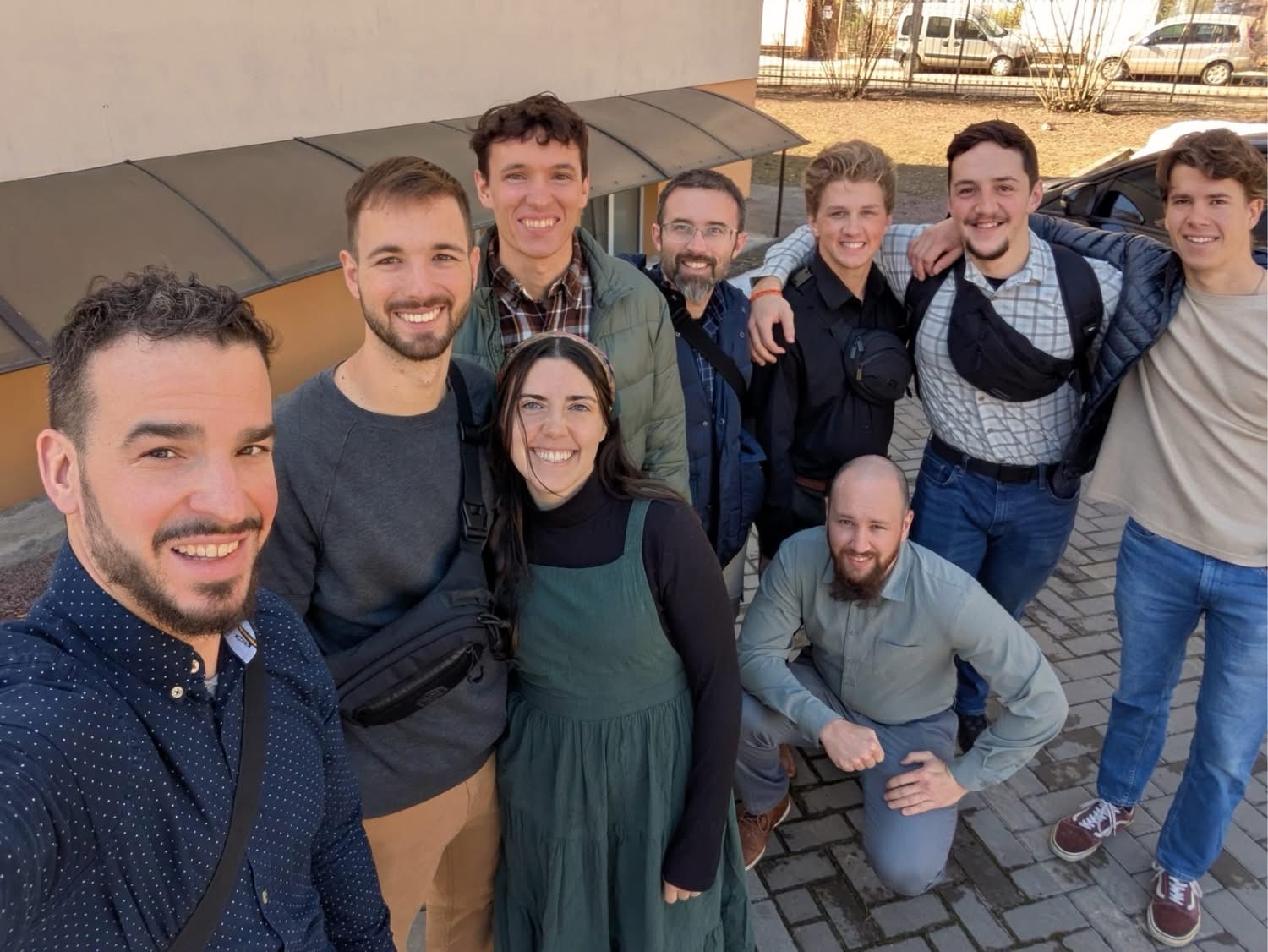
This trip began with the full team linking up in Ukraine, including the Guardian team that had been working in Kenya. From there, they moved into communities across the country, continuing the work of tactical first aid training, placing IFAKs into the hands of those most likely to need them, and strengthening relationships with local believers and partners.
In Ukraine, this training is so needed. One farmer named Sasha, who lives and works six miles from the front line, came back to one of our trainings after attending a previous class a few months earlier. During a break, he shook one of our team member’s hands and told his story:
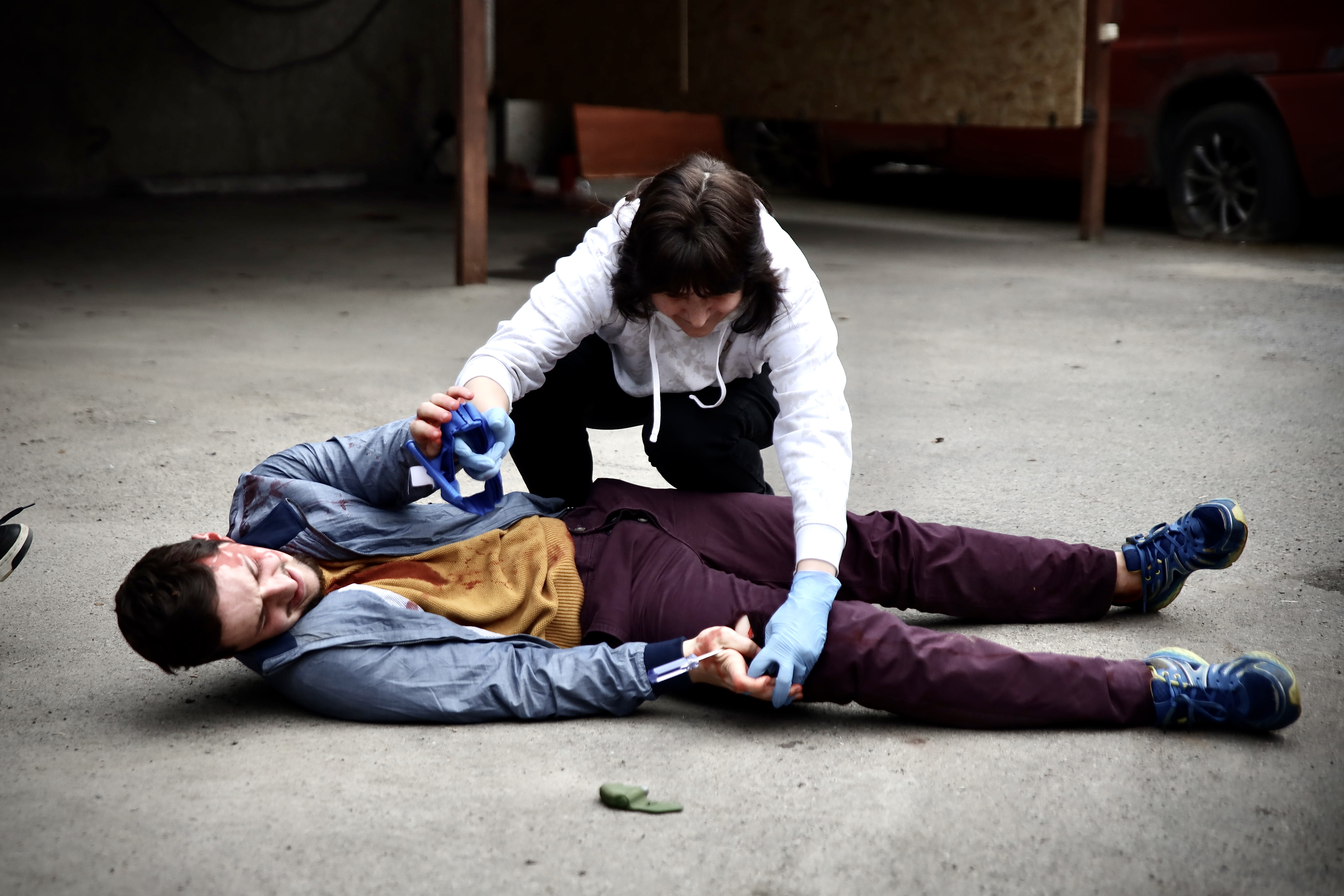
"If you had not taught us using the realistic scenarios, I would not have been able to react when the drone hit." Sasha, a farmer living and working just 6 miles from the front line, shook my hand during a break in one of our training sessions. When we had done a training in this same city a few months ago, he had been one of the students. "I had taken other first aid classes, but yours was the only one that actually had live scenarios with actual realistically wounded patients screaming in pain and having to think and react to dangers. It was stressful at the time, but forced me to act from muscle memory. Five days ago, a drone hit my friend's tractor while we were out working in the field. I drove over as quick as I could, and he was wounded everywhere. Arms, legs, head. I didn't think. I just acted. I tourniqueted him. I bandaged him, and I evacuated him, just like you trained. And I stayed calm. That is why I came again to your training. We need this. Thank you, and praise God!"
This is why realistic training matters. In an active conflict zone, people may have only seconds to act. They may not have a medic nearby. They may not have time to stop and think through every step. The goal is to give them a framework they can remember under pressure, and enough hands-on repetition that they can move when the moment comes.

The protocol we use is called SMARCH-E.
SMARCH-E is a battlefield algorithm built to address preventable deaths by focusing on what kills first. The order matters. Scene safety comes first, because the rescuer cannot become the next casualty. Massive hemorrhage comes next, because severe bleeding can kill within minutes. Then airway, respiration, circulation, hypothermia, and finally, evacuation.
In America, this type of tactical first aid is usually taught to military, law enforcement, and some EMS workers. In Ukraine, the people who need it are often civilians. They are drivers, baristas, daycare workers, volunteers, neighbors, farmers, road workers, and church members. They are ordinary people living in active conflict zones. Every participant in these classes received their Stop the Bleed certification, additional SMARCH-E training, and practical scenario work built around the threats they actually face, including drones, landmines, and care under threat.
One of the groups our team trained was a crew of utility workers and road workers who install protective netting over roadways to help defend against incoming drones. For them, danger is not occasional. It is part of the job. One foreman told our team he had lost two men in the past few months. These are the workers our team passes on the road while moving out of hot zones, but for these workers, this is daily life. They said, “They go after anything that moves, but we’ve adapted to this lifestyle." The workers told our team the training felt directly useful for the kind of danger they face. It also meant a great deal to them that someone came in person to their city, rather than sending help from a distance. Before our team left, they asked us to return.
Following the deployment, Cadet Sebastian said the moment that impacted him most was not a training session or a border crossing, but the multiple times when the team became deeply aware of how dependent they were on God’s protection.

The team visited a small town on the Ukrainian and Russian front-line, where FPV drones and shelling had become part of daily life. “The day before we went there, there were 18 drone attacks just in this little town,” Sebastian said. "But on the day our team arrived, the town was unusually quiet. There was one drone that flew over the town the whole day,” he said, “and that drone left as soon as we arrived.”
The team does not tell that story as if God’s people are removed from danger. Many faithful people in Ukraine continue to suffer, and the risks were real everywhere they went. But for Sebastian, that moment left a deep impression. It reminded him of God’s mercy in a place where no one on the team was in control. “The people were just shocked,” he said. “They were commenting about how this is completely unheard of. Just one drone today! That was likely the thing that impacted me the most on my time in Ukraine,” he said, “seeing the way God protected us and being able to use that as a way to point people to Him.”
Alongside the formal trainings, the team was also able to spend time helping local churches and families with practical needs. In one community, several of our Cadet Defenders helped an elder from a local church whose house sits about two miles from the front line. His home had been badly damaged early in the war, and he now lives there with his brother and sister, both of whom have special needs.
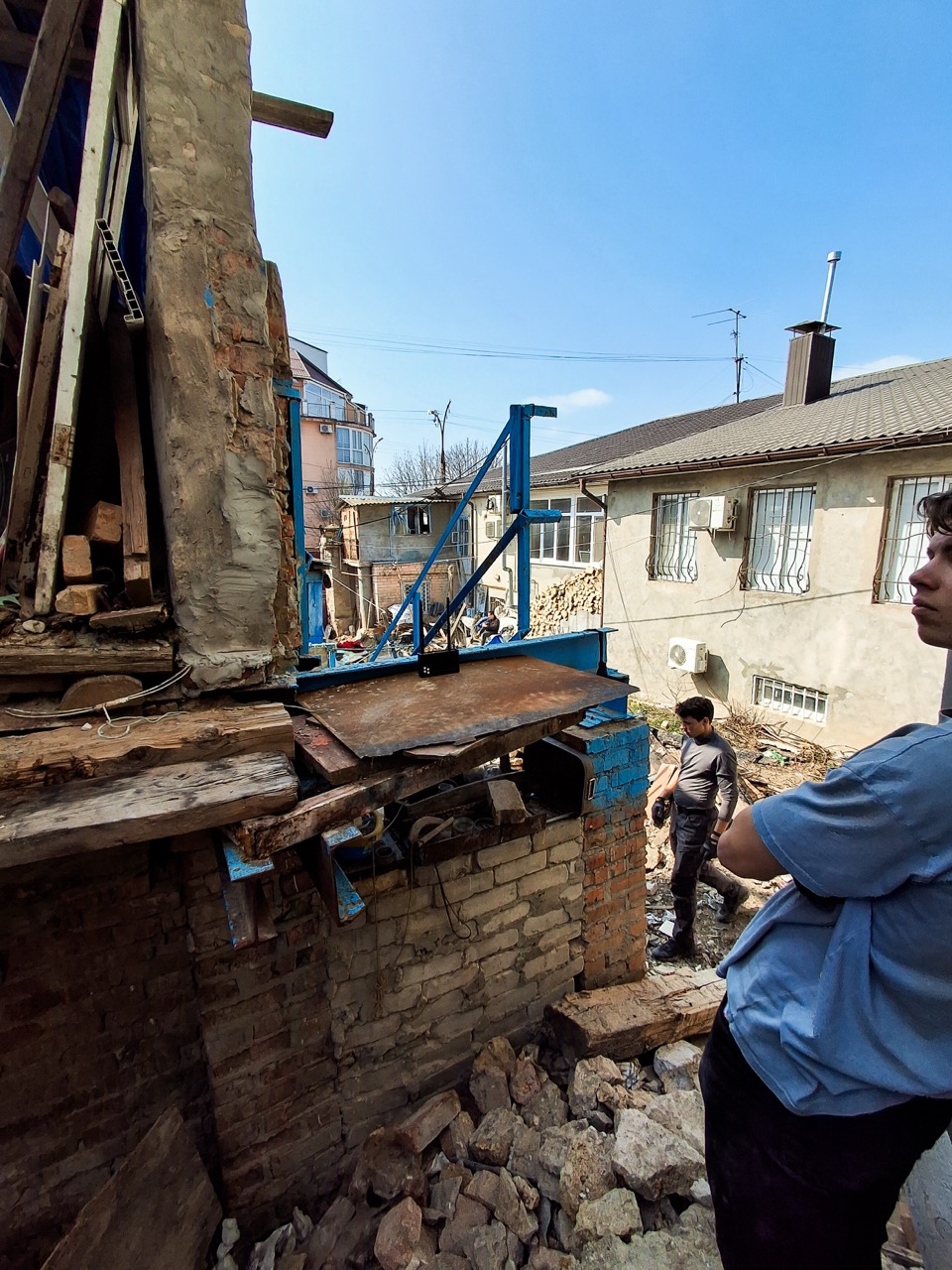
The team helped clear a large amount of rubble from his yard so he could continue organizing the area. He was hoping to grow plants there this summer. It was work he could not do alone, and very few people are willing to come into that area because of the danger. While the team worked, they could hear drones overhead and anti-aircraft guns firing nearby. The city near the front line was nearly empty. Streets were quiet. Buildings were abandoned. Then, farther from the front, the team would suddenly pass back into what felt like normal life. That contrast was one of the strange realities of working in Ukraine. The distance between danger and normalcy can be very small.
The Cadets also had time to spend with the local community. They helped with small projects, spoke in their churches, shared meals, went fishing, taught locals how to play American football, and continued building relationships between trainings.

That is part of the work too. Training matters. Supplies matter. But presence matters as well. In many of these communities, people have been living under the pressure of war for years. Showing up in person, staying with them, praying with them, and working beside them communicates hope in a deep way that cannot be sent in a package.
We are grateful for every open door, every partner who helped make this possible, and every person who welcomed our team into their community. We are also grateful for everyone who prayed, gave, followed along, and helped make this project possible. More than 700 people were trained during Project Nightingale 2.0. Over 100 IFAKs were placed into the hands of people most likely to need them. Food aid was given in the front-lines. Relationships were strengthened. Stories were brought home that we will continue sharing in the weeks ahead.
.jpg)
Please keep praying for the people of Ukraine. Pray for the civilians living under the daily threat of drones, mines, shelling, and strikes. Pray for the churches continuing to serve in dangerous places. Pray for the people who received training, that they would be able to act when the moment comes. Pray for wisdom as we consider the next steps in Ukraine and the doors that continue to open.
We do still have a little ways to go to fund our expenses from this trip into Ukraine. If you would like to give toward this work, you can do so at this link.
--
We have some exciting things planned for the next month or two, so stay tuned on our social media accounts @chazakrescue! for more updates! Otherwise, we'll see you again next month!